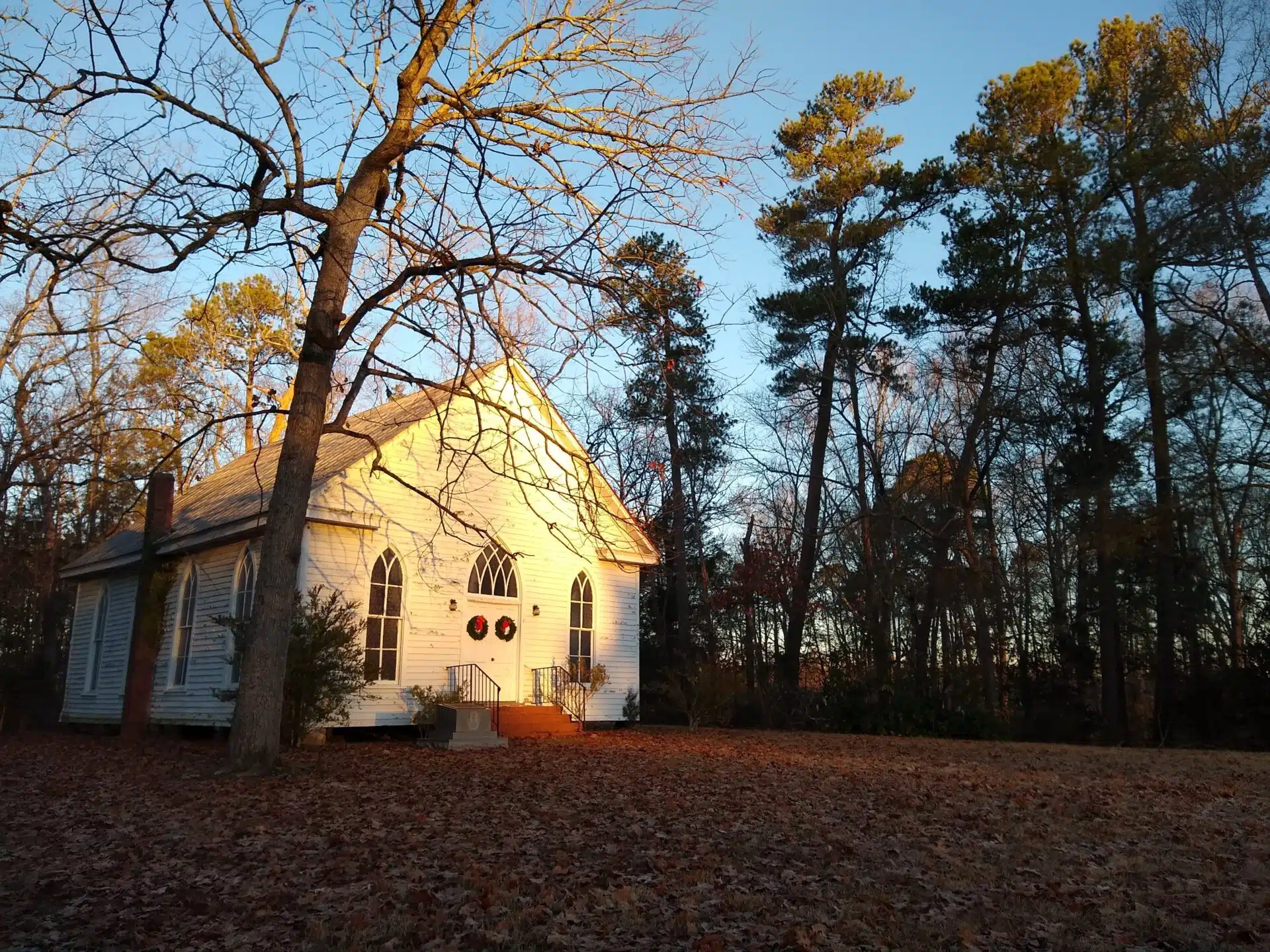
Tucked along NC-751 just south of Durham sits a small white chapel with a history that reaches back more than two centuries.
Today, O’Kelly Chapel is known as an intimate wedding and event venue, but long before couples walked down its aisle, the site was connected to James O’Kelly, an influential 18th-century minister who helped establish the Christian Church movement in the South.
The current chapel building dates to the early 1900s, but the story of O’Kelly Chapel begins much earlier—with James O’Kelly and a group of believers who wanted to create a different kind of church.
Who Was James O’Kelly?
James O’Kelly was a Virginia-born Methodist preacher who became an important figure in early American religious history. He traveled throughout the South as a circuit-riding minister, preaching to communities and helping establish churches.
O’Kelly became increasingly critical of the hierarchy of the Methodist Episcopal Church, particularly the authority held by bishops. He believed ministers and local congregations should have a greater voice in how their churches were governed.
In 1792, O’Kelly and other ministers challenged the growing authority of Bishop Francis Asbury at a Methodist conference in Baltimore. When their proposed changes were not accepted, O’Kelly led a group of ministers away from the Methodist Church.
The movement they formed was initially known as the Republican Methodist Church and eventually became known as the Christian Church.
James O’Kelly Comes to North Carolina
Around 1794, O’Kelly moved to what was then northeastern Chatham County, near what is now the Durham-Chatham County line.
There, he established a home and helped organize what became O’Kelly Chapel Christian Church. The congregation was organized in 1794, making it one of the earliest Christian Church congregations in North Carolina.
The location is particularly interesting today because the chapel sits just south of Durham. Although the historic property is in Chatham County, its location on NC-751 places it directly within the southern Durham community.
For more than two centuries, this small piece of land has remained connected to the religious community that James O’Kelly helped establish.
O’Kelly’s disagreements with Methodist leadership weren’t simply about one church position.
He believed in giving local churches and ministers more independence and advocated for a more democratic approach to church government. His ideas helped shape the Christian Church movement that developed after the split from the Methodist Church.
O’Kelly also spoke out against slavery. His 1789 Essay on Negro Slavery argued for the emancipation of enslaved people held by Methodist ministers, adding another important dimension to his legacy.
His influence continued throughout his later years as he traveled, preached, organized churches, and supported the growing Christian Church movement.
The O’Kelly Chapel Site Has Seen Four Buildings
The current chapel was built in the early 1900s and features the distinctive Gothic Revival style seen in its pointed-arch windows and simple wood-frame construction.
Inside, original Southern yellow pine floors and other historic details remain part of the building’s character.
So when you step inside O’Kelly Chapel today, you’re not standing in the exact building where James O’Kelly preached—but you are standing on the same historic site where his congregation was established more than 200 years ago.
Where Is James O’Kelly Buried?
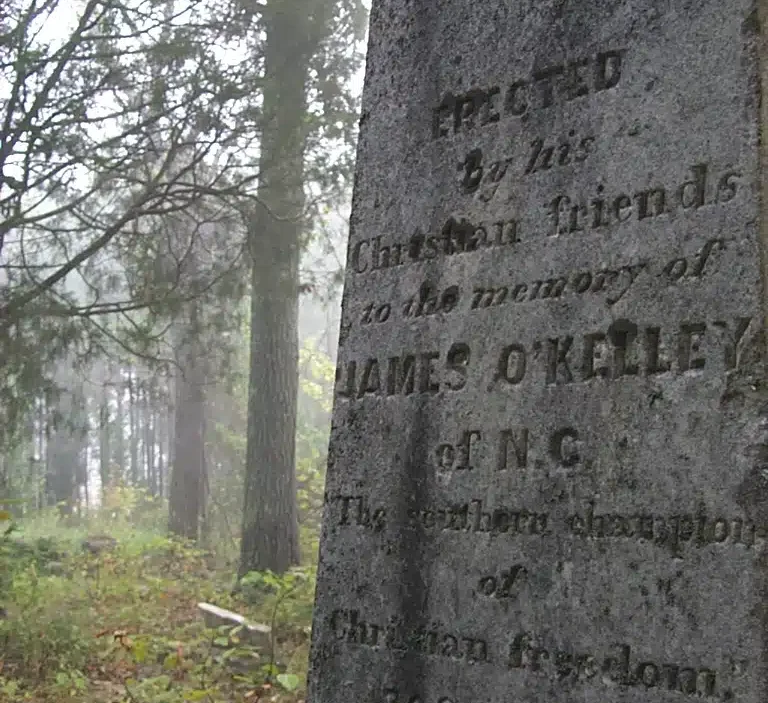
James O’Kelly died on October 16, 1826, in Chatham County.
He was buried in the family cemetery near O’Kelly Chapel, and his grave remains just a short distance from the chapel itself. According to the North Carolina Department of Natural and Cultural Resources, his grave is approximately 300 feet west of the chapel.
That makes the history of O’Kelly Chapel particularly tangible. The man who gave the chapel its name isn’t simply a historical figure associated with the building—his final resting place is nearby.
O’Kelly Chapel Today
More than 200 years after James O’Kelly helped establish the congregation, the chapel has entered a new chapter.
The current building was restored and renovated to preserve its historic character while making it functional for modern gatherings. Restoration work included structural repairs, improvements to the building’s utilities, and updates that allow the chapel to welcome guests today. The renovation was completed in 2024.
Today, O’Kelly Chapel hosts micro weddings, elopements, ceremony-only weddings, and private events for intimate gatherings.
The chapel’s historic Gothic windows, original pine floors, and wood interior remain central to its character, while modern amenities make it possible to comfortably host today’s celebrations.
A Historic Place for a New Beginning
There is something special about getting married in a place with a story that stretches back generations.
At O’Kelly Chapel, couples aren’t just choosing a beautiful backdrop for their wedding day. They’re stepping into a piece of local history.
James O’Kelly’s original congregation was established here in 1794. The chapel has been rebuilt over the years, communities have changed, and the building itself has entered a new chapter—but the site remains.
Today, the same property that once served as a gathering place for a growing religious movement is once again a place where people come together.
Only now, they’re gathering for weddings, celebrations, and new beginnings.
Celebrate Your Own Chapter at O’Kelly Chapel
Located on NC-751 near the Durham-Chatham County line, O’Kelly Chapel offers a historic and intimate setting for micro weddings, elopements, ceremonies, and private events.
Whether you’re planning an intimate wedding or simply looking for a unique historic venue in the Durham area, O’Kelly Chapel offers something you can’t recreate in a new building: 200+ years of history built into the place itself.